Hiwebxseriescom: Adhuri
Take your aim to the next level with AimWave – the most powerful and undetectable aimbot for Counter-Strike: Condition Zero. Free to download and easy to use.
⬇️ FREE DOWNLOAD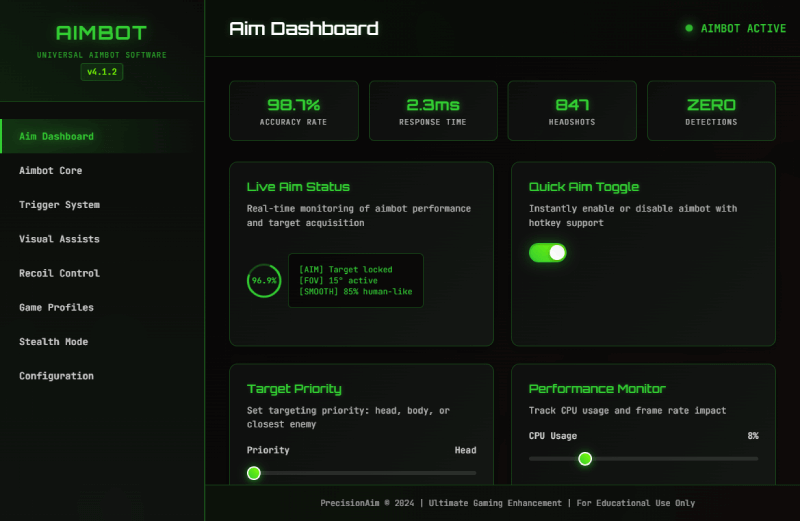
Take your aim to the next level with AimWave – the most powerful and undetectable aimbot for Counter-Strike: Condition Zero. Free to download and easy to use.
⬇️ FREE DOWNLOAD
Advanced tools to guarantee perfect aim
Pixel-perfect precision. Customizable settings for legit or rage play.
See enemies and loot through walls in real time.
Hit targets without snapping crosshair – look legit while dominating.
Locate weapons, shields, and chests easily.
Auto-shoot when crosshair is on a target.
Prioritize enemies by distance, health, or weapon.
Latest version - Updated for the current Counter-Strike: Condition Zero patch
🎯 DOWNLOAD NOW - FREE✅ Free Forever • ✅ Undetectable • ✅ Easy Setup
Designed for serious Counter-Strike: Condition Zero players
Our aimbot is free forever, no strings attached.
Undetectable with advanced protection.
Stay compatible with every patch.
"Adhuri HiWebXSeriesCom" sounds like the title of a fragmented digital story — part unfinished website, part serialized web drama, and part cultural fragment left hanging between updates. Below is a short, evocative article that treats the phrase as both object and mystery: a vanished URL, a cult indie web series, and a metaphor for the internet’s half-finished promises. A Ghost in the URL There’s something uncanny about seeing words squashed into a domain-like string: adhurihiwebxseriescom. It reads like a clue left in code. “Adhuri” — incomplete in several South Asian languages — signals something stopped mid-breath. Add “HiWebXSeriesCom” and you have a hybrid: hello to the web, an X-series suggesting experimental episodic content, and a lurch toward commercial formality with that trailing “com.” The whole construct feels like a placeholder for a project that never finished loading. The Series That Never Launched Imagine a web series built around absence: each episode half-made, comments trailing off, production stills that double as evidence and alibi. The creators of Adhuri HiWebXSeriesCom were a small collective of filmmakers and coders who celebrated imperfection. They released teasers that looped forever, character pages that contained only one sentence, and an episode guide with dates that always read “TBA.” Fans constructed theories to fill every gap — love affairs, conspiracies, alternate timelines — and the community’s creativity became the series’ primary content. Design as Narrative The site’s interface matched its theme. Backgrounds were intentionally pixelated, links led to placeholders, and a header bar flashed “Error 204: Meaning Not Found” between presses. These choices weren’t bugs but dramaturgy: the broken UI mirrored characters’ fragmented lives. The series asked: when is an unfinished thing complete? When audience imagination supplies the rest, did creators succeed or abdicate? Cult and Commodity Ironically, the incompletion birthed a cult. Fans traded screenshots like relics, created fan-fiction to patch narrative holes, and even staged live experiences recreating missing scenes. A small online marketplace sprang up: stickers, prints of “404” frames, and vinyl pressing of ambient soundscapes harvested from teaser clips. The project became both an aesthetic movement and a micro-economy — an unfinished work turned product. A Metaphor for Our Times Adhuri HiWebXSeriesCom resonates because it captures the internet’s habit of perpetual drafts. Social platforms, indie creators, and startups all exist in beta; lives are curated in progress bars. The project’s unapologetic incompletion forces a question: must every story be polished to be meaningful, or can the gaps be where meaning lives? Legacy, or an Archive of Interruptions Whether the site eventually relaunched or remained an artifact of the mid-2020s, its influence spread through creators who embraced “adhuri” aesthetics: lo-fi interfaces, serialized ambiguity, and community co-authored narratives. It stands as a reminder that sometimes the most compelling work is the work that refuses closure.